2 November 2026
What is a hyperscale campus, and how does it differ from a single data centre build?
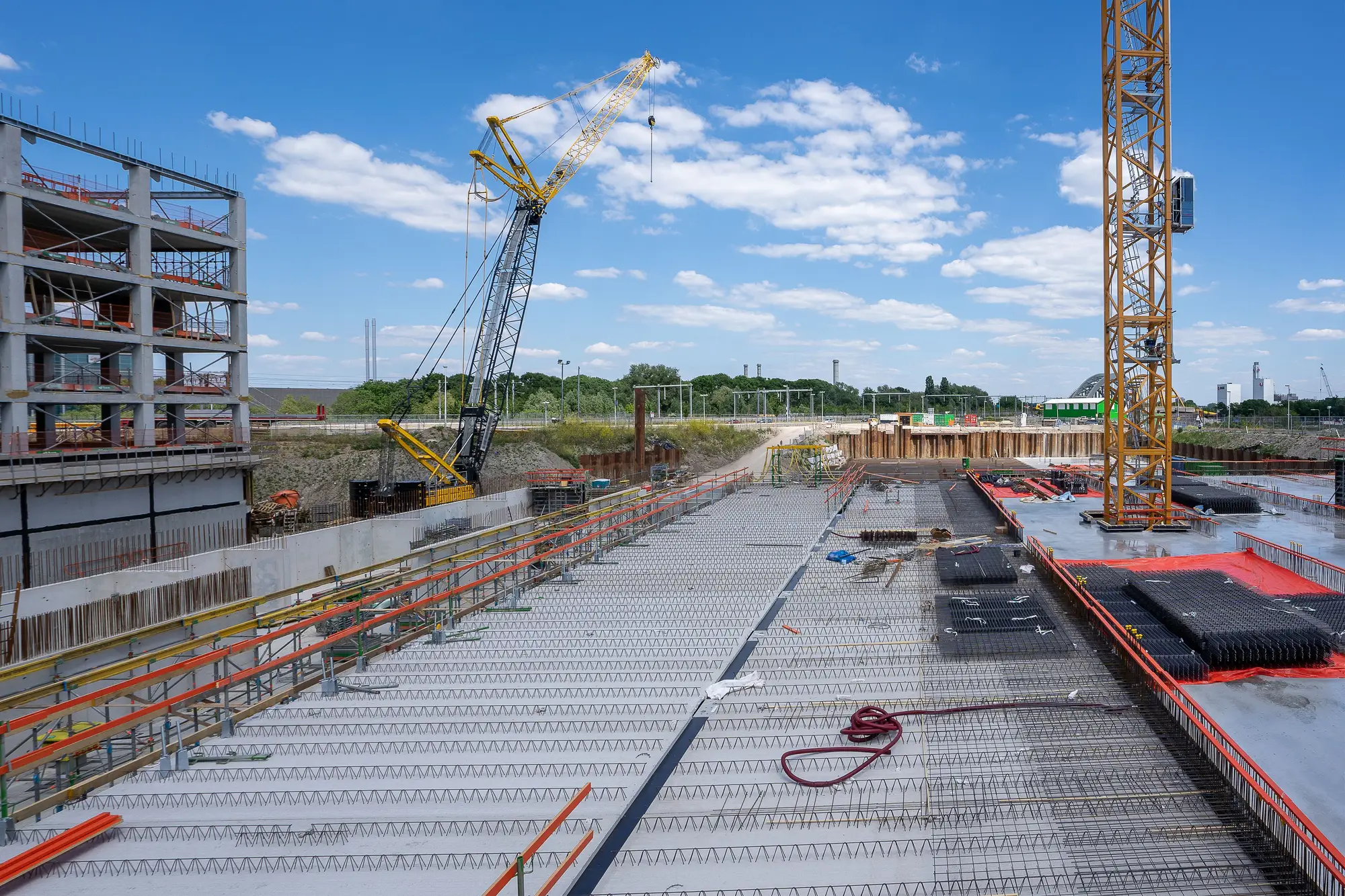
If you quote power, cooling or civils packages for data centre work, you've probably noticed the same site name keeps coming up in RFPs months apart, sometimes years apart. That's usually not a second job. It's the next phase of a hyperscale campus, and if you're pricing it like a one-off building, you're going to misjudge the timeline.
A single building vs a campus
A standalone data centre is one shell on one plot, with its own substation connection, its own chiller or CRAH plant, and a fit-out that runs more or less start to finish on one programme. You can scope it the way you'd scope any large industrial building: pad prep, structural steel or precast, envelope, MEP rough-in, fit-out.
A hyperscale campus is a different animal even though the individual buildings look similar from the road. It's a masterplan for several data halls on one site, usually built out in stages over several years rather than one continuous programme. The first building might be live and racked while the second is still at groundworks, and a third parcel sits graded and fenced waiting for the operator's next capacity decision. Power is usually planned at campus scale too: one substation or switching station sized for the eventual full build, with each building drawing its allocation as it comes online. Cooling plant can be centralised in the same way, with a shared chiller yard or cooling tower farm feeding multiple halls rather than each building running its own standalone plant.
That's the operational logic behind the term. For a BD lead, the practical difference is simpler: a campus isn't one tender, it's a sequence of them, and the packages don't all land at once.
Why phased builds change how you plan your pipeline
On a standalone building, your buyers are mostly working to one programme. You win the substation package or the cooling package and you're done until the next project comes up elsewhere.
On a phased campus, the same general contractor, the same cooling plant subbies and often the same switchgear supplier can get called back for building two, three and four, sometimes at twelve or eighteen-month intervals as each phase gets its final investment decision. Watching the site itself puts that repeat work on your radar well before the tender board does. A planning notice for phase two often appears well after groundworks have already started, because the operator doesn't always wait for full approval before mobilising the next pad.
There's also a reverse signal worth knowing: a campus where phase one finished eighteen months ago and phase two's parcel is still sitting ungraded tells you that expansion has stalled, which matters just as much as a site that's moving.
Reading campus progress from the ground up
Because a hyperscale campus phases its power and cooling infrastructure separately from each building's shell, the clues that a new phase is about to go out to tender show up on site before anyone issues a scope document. A new substation compound being fenced and graded next to a live campus, concrete starting to pour on an adjacent pad, a cooling yard footprint being cleared well before the building above it, these are the early markers that the next package is coming. None of that requires inside information. It's visible on the ground, which is exactly why watching it directly, rather than waiting for the industry newsletter or the planning portal to catch up, gives you lead time the next bidder on the list doesn't have.
Data Centre Build Watch is built around that gap: monthly, per-site imagery reads that follow pad, substation, cooling plant and shell progress across a campus phase by phase, so you can see the next package forming before it's quoted.
If your pipeline depends on knowing which campus is about to move into its next phase, it's worth watching the site itself, not just the tender notice.