13 October 2026
What is a fuel farm, and why it matters for data centre standby power
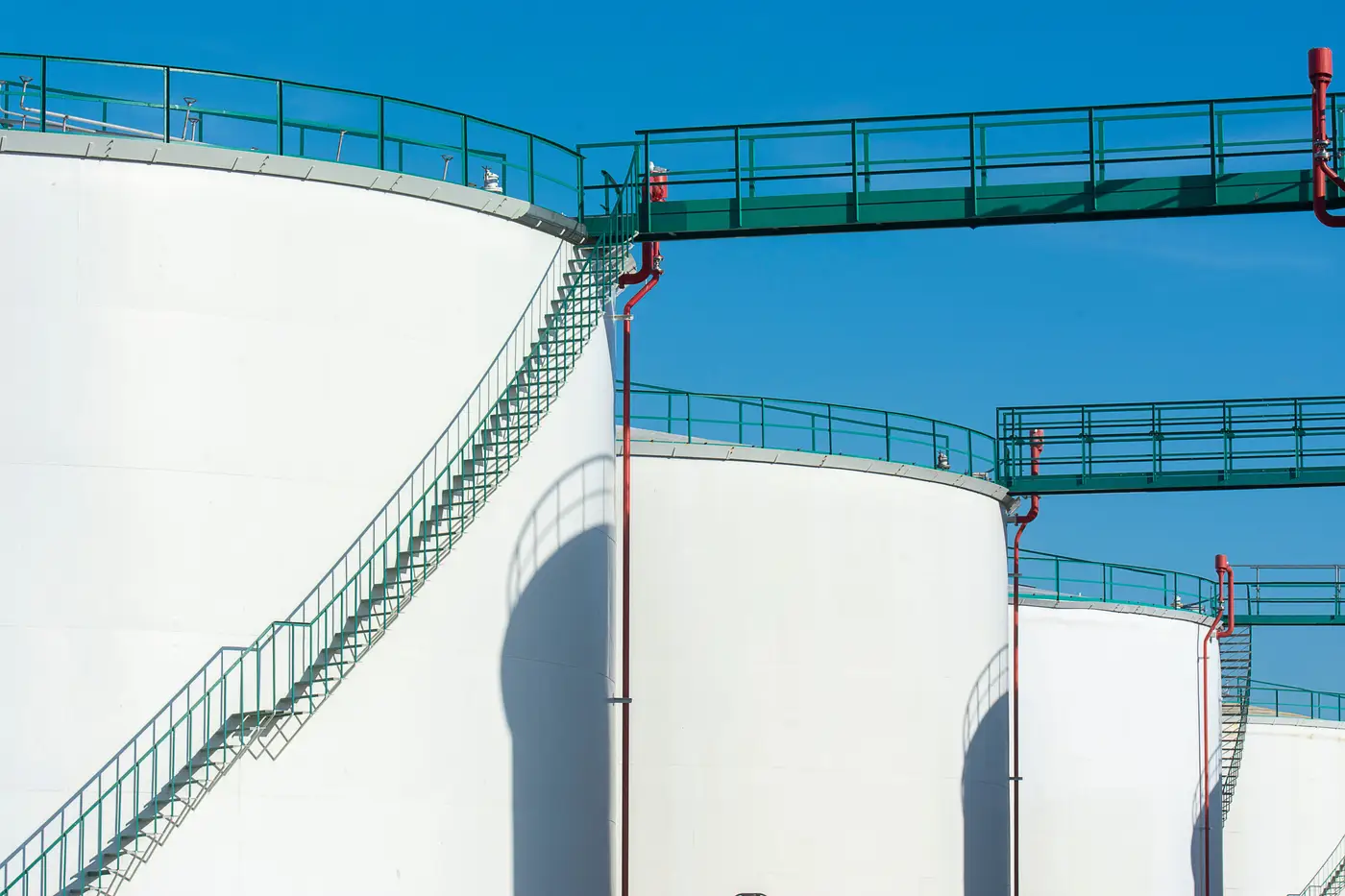
If you've walked a hyperscale site before the building's even closed in, you've probably stood next to a fuel farm without clocking what you were looking at. It's not glamorous. A cluster of bulk storage tanks, concrete bunding around the base, a pump skid, fuel polishing kit, and piping running off to a generator yard. But it's one of the first packages to go firm on a lot of these jobs, and it tells you more about the scale of the build than the shell ever will.
What's actually in a fuel farm
A data centre fuel farm is the bulk diesel storage and distribution system that keeps standby generators running during a grid outage. It's separate from the day tanks bolted next to each genset, those only hold a few hours' worth. The fuel farm is the reserve: aboveground tanks (sometimes below-grade, depending on the site and the local fire code) sized to keep the whole generator fleet running for a set number of hours, often 24 to 72 depending on the operator's resilience target and how confident they are in the grid they're sitting on.
The civils scope is bigger than people expect going in. You're pouring reinforced concrete bunds sized to contain a full tank failure, running double-walled or coated steel pipe to each generator, fitting leak detection and overfill protection, and tying the whole thing into the site's fire suppression and environmental containment plan. Local authorities having jurisdiction treat this as a flammable liquids installation, not a building service, which means a separate permitting track that can run on its own timeline from the rest of the civils package.
Why standby power sizing drives the fuel farm footprint
The fuel farm's size isn't an afterthought bolted onto the generator order. It's derived from the generator capacity, the number of gensets in the N, N+1 or 2N configuration, and the hours of autonomy the operator has committed to in their resilience documentation. A hyperscale campus running 2N generation at scale needs a materially bigger tank farm than a single-tenant colo site running N+1, even before you account for refuelling logistics in the area.
That's the detail worth tracking if you're quoting civils or fuel system packages. A fuel farm footprint tells you the standby generator capacity before the generator order is public, and the generator capacity tells you roughly what class of campus you're dealing with. Tank pad dimensions and bund wall layout, visible from the air well before the tanks themselves arrive on site, are a reasonable proxy for how big this build actually is.
Fuel farm construction as an early tender signal
Fuel farm civils tend to start earlier in the sequence than people assume, often alongside substation foundations and before the shell is weathertight. That's because long-lead items (tanks, pumps, switchgear for the fuel system itself) get ordered early, and the pad and bunding need to be ready to receive them. If you're a civils or power subcontractor waiting for a tender notice to tell you a fuel farm package exists, you're finding out after the concrete's already poured and the relationships with the GC are already set.
Tracking pad clearance, bund wall pours and tank arrival against the rest of the site, substation, cooling plant, shell progress, gives you a read on where a job sits in its sequence without relying on a planning portal update or an industry newsletter picking up the story. That's the gap Data Centre Build Watch is built to close: a monthly, per-site read on construction progress across the hyperscale and big-box pipeline, pad to roof, so you're scoping and pricing before the tender's already out for quotes.
If you'd rather see which sites in your patch have tanks going in right now than wait for the next bulletin, that's worth a look.