26 October 2026
What is a data hall, and why it matters for fit-out subcontractors
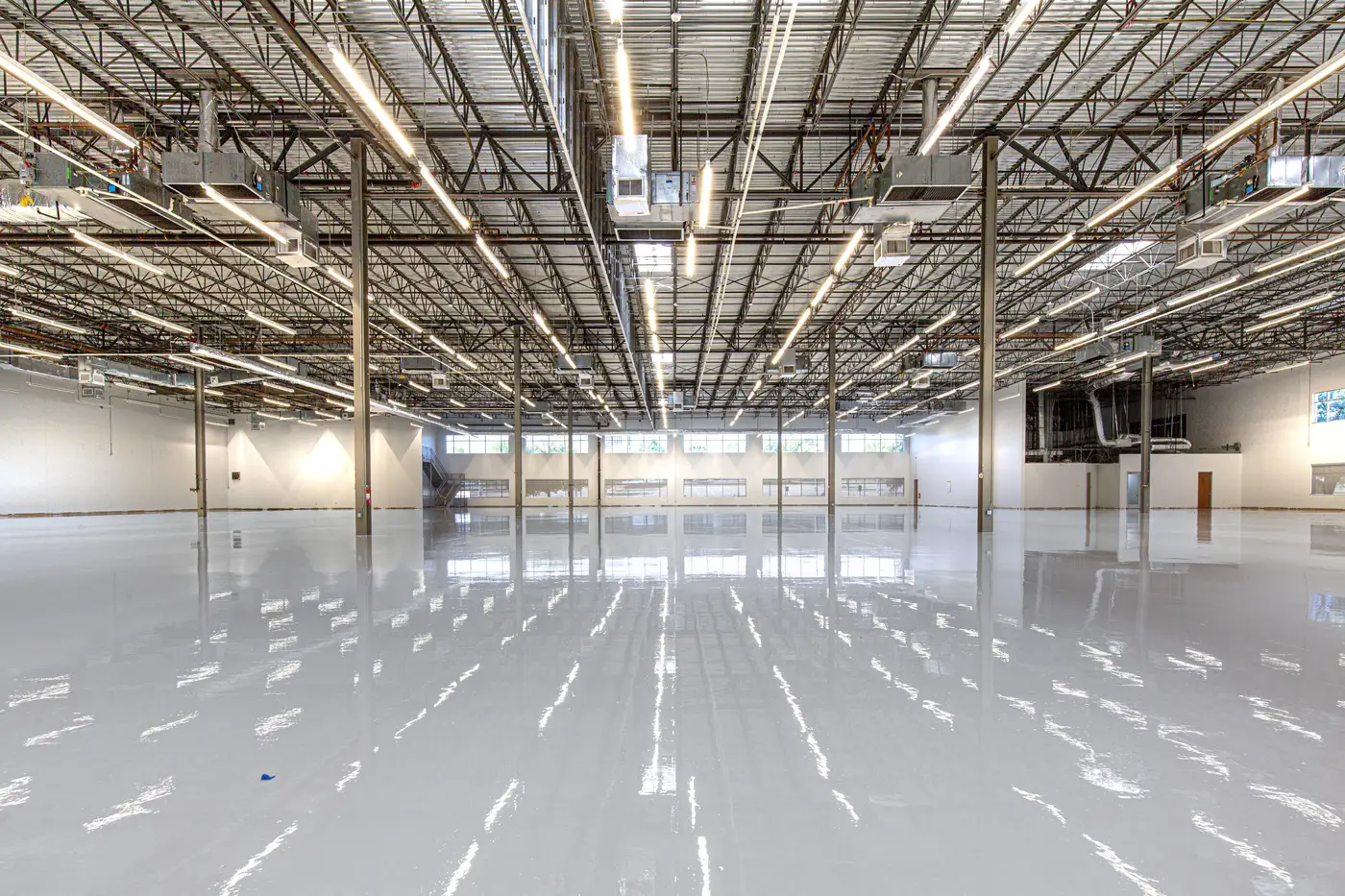
If you've been copied into a data centre tender pack, the drawings already assume you know what "white space," "data hall" and "grey space" mean. Here's what each term covers, and what it tells you about where that package sits in the build.
Data hall, defined
A data hall is the room (or rooms) inside a data centre building where the IT racks sit. It's the space with raised access floor or slab-on-grade for overhead busbar, hot aisle/cold aisle containment, in-row or perimeter CRAH units, fire suppression tuned for electronics rather than people, and power distribution down to rack level via PDUs. Everything in there is built to keep servers running at a set temperature and humidity, with redundancy on cooling and power so a single failure doesn't take the room down.
"White space" is the trade shorthand for the same thing: the floor area that's leasable or usable for IT load, as opposed to "grey space," which is the plant rooms, switchgear rooms, generator yards, UPS halls, loading docks and corridors that support the white space but don't hold racks. On a hyperscale campus, grey space can easily be half the building footprint. For a colo operator pricing by the kW, white space is the number that pays the mortgage, and it's the figure that shows up in their marketing even when it isn't the figure that shows up in your scope.
Why the distinction matters to you: the white space fit-out is its own distinct phase of the build, usually let as a separate package (or several) from shell and core, and often from the central plant too. Mechanical and electrical contractors, containment installers, raised floor crews, fire suppression specialists and structured cabling teams are all bidding into that white space phase specifically, not the building as a whole.
Why fit-out subcontractors need to see this coming
Most of you find out a data hall fit-out exists when the main contractor or the operator's project team puts the package out to tender. By then the shell is topped out, the substation connection is agreed, the cooling plant is specified, and the programme for white space fit-out has already been fixed around a go-live date the client isn't moving. You're pricing against a schedule you had no say in, often with three to six other firms who got the same email on the same day.
The shell going up is the signal that the fit-out package is coming. A site with structural steel standing, roof on, and a substation under construction next to it is a site where containment, raised floor and CRAH packages will be let within months, not years. Spotting that stage from the outside, before the tender notice lands in your inbox, is the difference between being ready to bid with a scoped price and scrambling to turn one round in a fortnight because that's all the programme allows.
Planning portals tell you a scheme was approved, sometimes eighteen months before a shovel goes in the ground. Industry newsletters tell you a project exists, usually after the packages are already being quoted. Neither tells you where a specific site actually sits between foundations and roof, which is the window that matters for anyone pricing white space fit-out, cooling plant or substation works.
That's the gap Data Centre Build Watch is built for: a monthly, per-site read of build progress from high-resolution imagery, pad through shell to cooling plant and substation, so you can see a site moving into fit-out territory before the main contractor circulates the tender list.
What this means for your pricing window
A data hall is the IT space, white space is the leasable version of the same thing, and grey space is everything else holding it up. What fit-out subcontractors need from those definitions is simpler: a read on which sites are close enough to shell completion that the white space package is about to move, early enough to have a priced, resourced bid ready instead of a rushed one.
Check your region's hyperscale pipeline for sites approaching that stage, and get ahead of the next round of fit-out tenders before they're circulated.