13 October 2026
Cold shell vs warm shell on a data centre build: what the handover point means
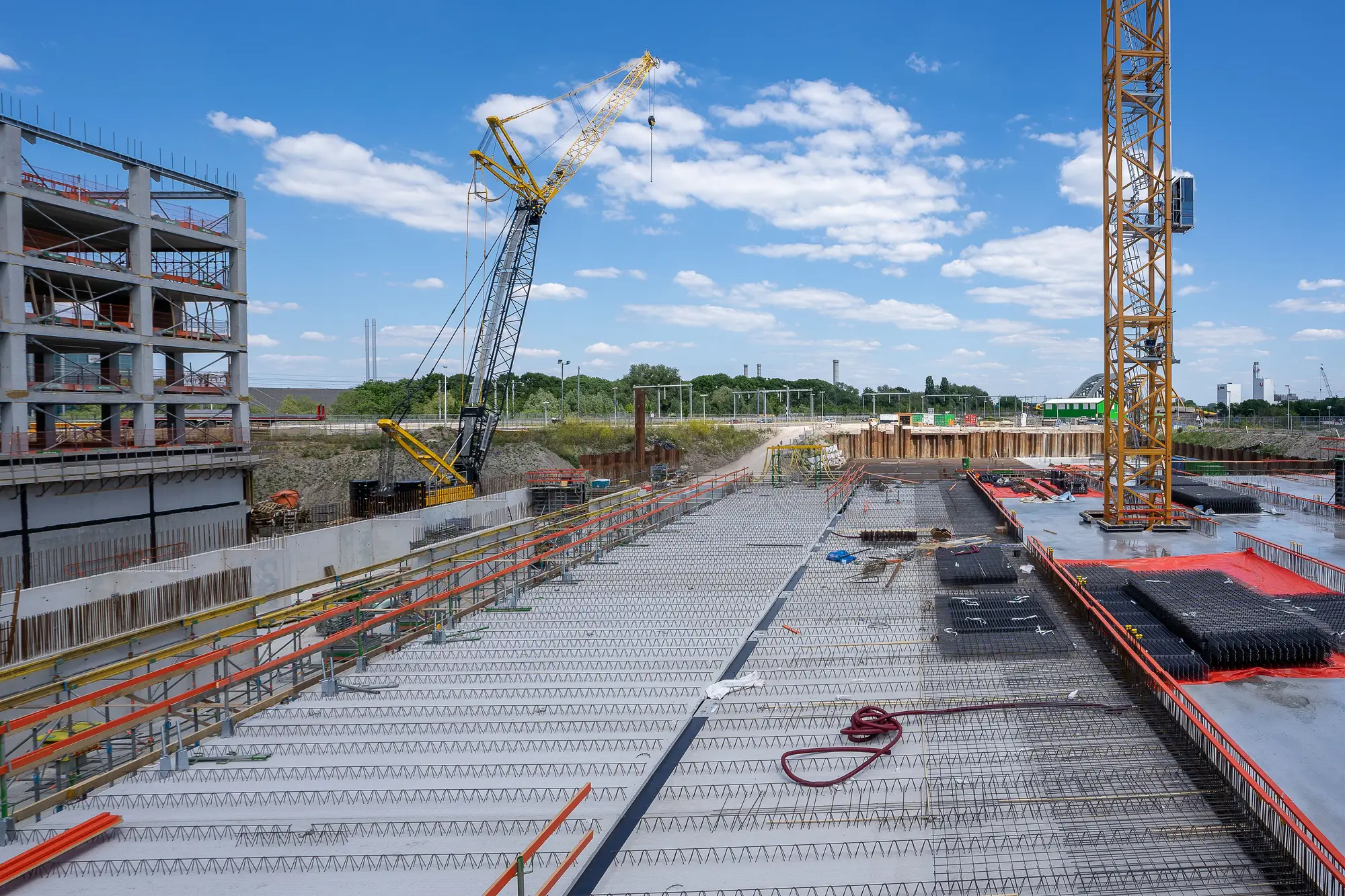
On a hyperscale or big-box build, the word "shell" covers more than one stage, and which one you're looking at decides which packages are out for quote and which are still months off. Get the distinction wrong and you're chasing a tender that isn't real yet, or missing one that's already gone out.
Cold shell: the building without the guts
A cold shell handover is the building envelope on its own. Walls up, roof on, slab poured, loading doors hung. No power distribution beyond a temporary supply for the trades still on site, no mechanical plant running, no raised floor, no containment. If you're a civils or structural steel contractor, cold shell is roughly where your scope ends and the MEP packages start queuing up behind you.
For a cooling or power subcontractor, cold shell is the signal to start sharpening the pencil. The package itself is still months off: the substation might not exist yet, and the CRAH units haven't landed on site.
Warm shell: fit-out ready, services roughed in
Warm shell sits further along. The envelope's done and so is the first pass at building services: primary electrical distribution roughed in, mechanical risers in place, sometimes the generator yard poured and fenced even if the gensets themselves aren't set yet. A warm shell building is usually what a hyperscaler or colo operator takes handover of before their own fit-out team, or a fit-out contractor, comes in to run final power and cooling to rack level.
The line between warm shell and "ready for IT load" varies by developer. Some shells come with switchgear energized and chilled water loops charged. Others stop short of that and leave final commissioning to whoever wins the fit-out package. There's no single industry spec that pins down exactly what's included at warm shell handover, so read the drawings and the developer's own handover schedule for a given site. Two buildings that both get called "warm shell" in a leasing brochure can be weeks apart on substation energization.
Why the distinction decides who's bidding and when
Cold shell completion is usually when civils wind down and MEP contractors start getting invited to pre-qualify. Warm shell completion is closer to when fit-out and controls packages go out, and by then the power and cooling scope has often already been awarded to whoever was positioned at cold shell stage.
If your first notice of a site is a planning-portal update or an industry newsletter picking up the story, you're often finding out about a project after cold shell has already been poured and the first MEP packages have gone to tender. Watching slab, steelwork and roof progress on a site month over month gives you a read on which stage a building's at, independent of whatever label sits on a developer's press release. That's the basis of the per-site progress read run at Data Centre Build Watch, tracking the pipeline from pad to roof through to substation and cooling plant so a cold shell completing shows up before the tender notice does.
A few things worth checking before you quote
Before putting a number on anything, confirm whether the generator yard's been poured or just fenced off. Check if the substation building itself is up, or whether the compound's only been graded. See if switchgear has been delivered to site, even if it isn't energized yet. These are the tells that separate a cold shell genuinely close to MEP handover from one that's still six months out and running behind.
None of this replaces reading the spec pack for a given site once you're in front of it. But knowing roughly which shell stage a building's at before that spec pack lands on your desk is the difference between quoting early and quoting late.
Track the builds in your patch and you'll stop finding out about packages the week they close.