9 November 2026
Switchgear compound vs transformer yard: telling them apart in satellite imagery
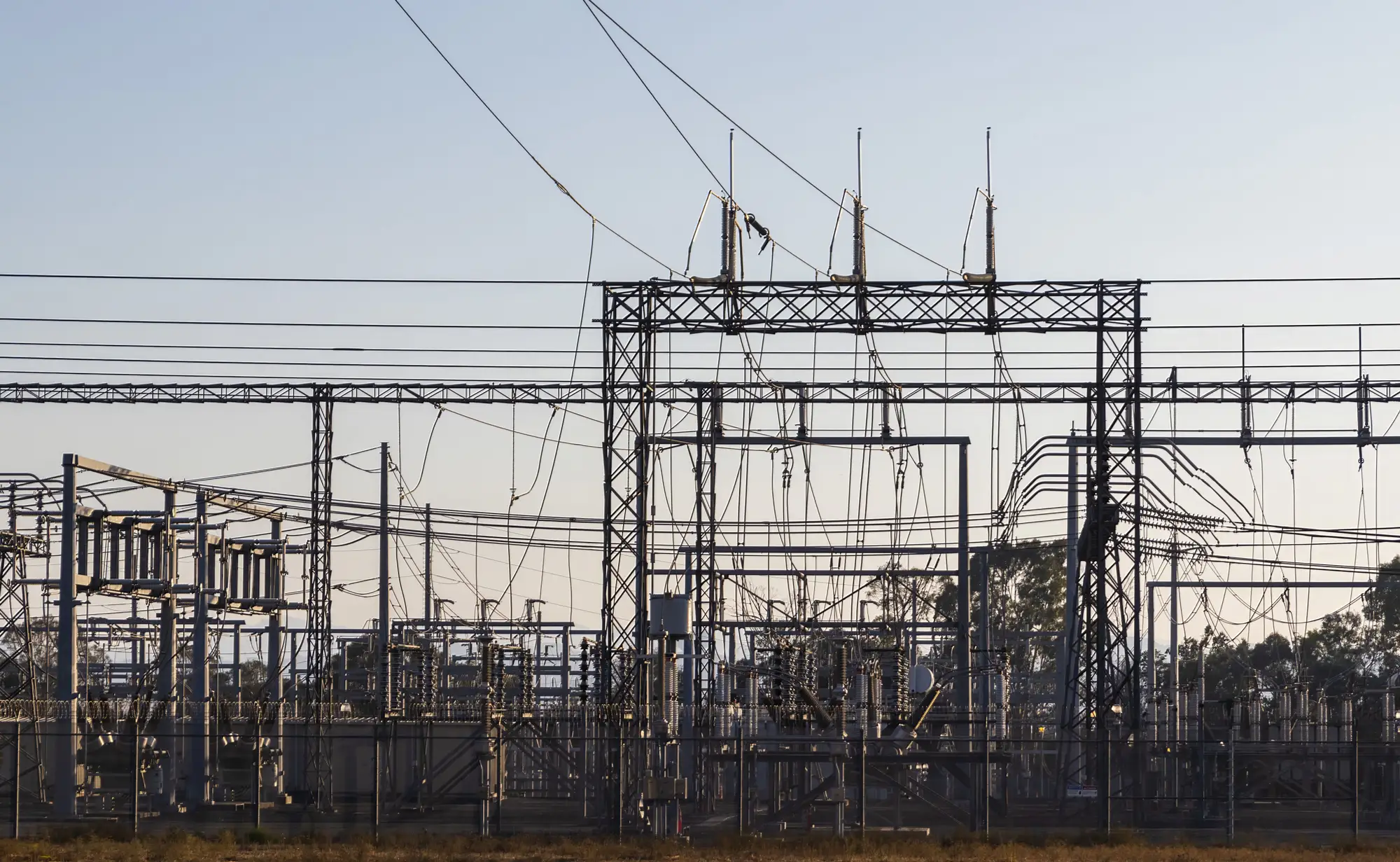
Anyone scoping a hyperscale power package off imagery alone has made this mistake at least once: you flag what looks like the HV compound, size up the cable run, and it turns out you were looking at the transformer yard the whole time. They sit next to each other on most campuses, they're both fenced, both grey, both show up as rectangles on a greenfield pad. But the footprint, the shadow texture and the fence pitch tell you which is which if you know what to look for.
Start with the unit size, not the fence line
Look at the size and spacing of the individual pieces inside the compound before you even trace the fence line.
A transformer yard is a row of large, discrete rectangular units, each one typically 5 to 8 metres on its long side, sat on its own plinth with clear separation between neighbours. That separation isn't random. Fire-wall spacing rules push transformers apart, and you'll often see a low bund wall or gravel containment pit around each unit, visible in VHR as a lighter or darker ring depending on the fill. Count the units and you can usually guess the substation's transformer count straight off the image.
A switchgear compound reads differently. The enclosures are smaller and packed tighter, sometimes under a flat canopy roof that reads as one uniform grey rectangle rather than several. If it's air-insulated switchgear you'll pick up a steel lattice gantry overhead, the kind that shows as a faint grid of thin parallel shadows running between support towers. If it's gas-insulated switchgear, there's no gantry at all. It's just a plain steel-clad shed, which is itself a tell: a clean rectangular building with no visible bus structure and no finned units nearby is almost always a GIS building, not a transformer house.
Read the radiator fins and the trenches
Transformers carry radiator banks, and those banks cast a distinctive shadow texture: long, tight, parallel ribs running off the side or rear of the unit. At 0.5 m GSD this reads as a striped patch next to the main rectangle, and it's one of the most reliable single tells on the whole site. Switchgear bays don't have this. Their shadows are blockier, from breaker housings and support steelwork, not finned cooling surfaces.
Cable trenches are the other giveaway. A transformer yard typically has a short run of disturbed ground or a visible trench line heading toward the switchroom or the main HV compound. A switchgear compound is usually the destination of several such trenches converging from different directions, since it's the hub feeding out to the data halls, the cooling plant and the grid connection point.
Why the mix-up actually costs you lead time
For a BD lead working power packages, this isn't a trivia exercise. Which compound is progressing tells you which subcontractor package is about to open. Transformer yard groundworks and plinth pours happen on a different schedule to switchgear building and gantry steel, and tendering follows that schedule. Read the wrong structure as the leading indicator and you'll chase a quote window that's already closed, or sit on your hands while a window you thought was months out has already opened.
It also matters for scale. A site with three large transformer units and a modest switchgear shed is a different order of connection than one with a sprawling gantry yard and six units. That distinction, read correctly from the imagery, tells you roughly what size of civils and cooling package is coming with it, before anyone's put a notice out.
This is the kind of read that's easy to get right once and then hard to repeat consistently across a dozen sites a month, especially once foundations are poured and the distinguishing detail is buried under new steelwork. Data Centre Build Watch tracks that progression site by site on a monthly cadence, pad through shell, substation and cooling plant included, so the compound you flagged last month is the same one you're checking this month, not a fresh guess.
If you're trying to get ahead of a power package before it's out to tender, that's exactly the gap this is built to close.