19 October 2026
How to count generator bays from satellite imagery
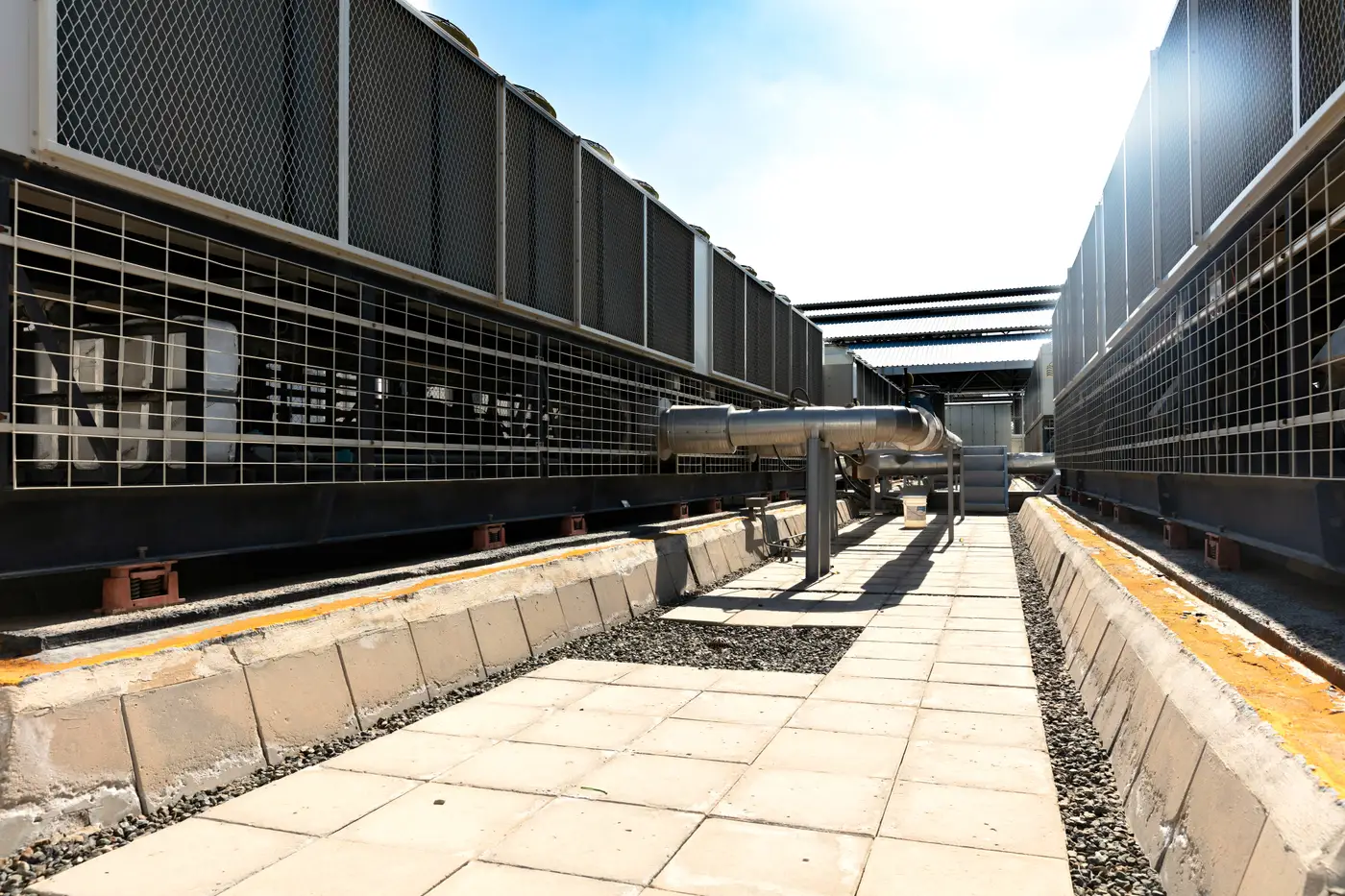
If you've ever tried to price a standby power package off a planning notice alone, you know the problem: by the time the drawings are public, the hyperscaler has already picked its genset vendor and the civils package is half-scoped. The generator yard tells you the MW number months before any of that paperwork lands, if you know what you're counting.
Why the generator yard gives away the MW number
Data halls hide their IT load behind cladding. The generator yard doesn't hide anything. Containerised gensets sit on concrete pads in a row, usually along one edge of the site or ringing the building, each unit roughly the footprint of a shipping container with a radiator bank on one end. Count the pads, and you've got a rough read on standby capacity before a single rack ships.
Typical hyperscale units run somewhere in the 2-3 MW range per genset, though vendors and site specs vary, so treat any single multiplier as a rough guide, not a spec. What you're really doing is pattern-matching: a 20-bay yard reads as a flagship campus, a 6-bay yard reads as a regional edge site, and that gap tells you which one you're pricing before you've opened a single drawing. For a sub deciding whether to chase a lead, that's often enough to know before you spend BD hours on it.
What counts as a generator bay
From VHR imagery you're not reading a nameplate. You're counting concrete pads, radiator footprints, and fuel connections, and inferring the rest. A few things that help separate real genset bays from other yard kit:
- Spacing is regular. Gensets get installed on a fixed module grid, so bay spacing repeats down the row. Irregular gaps usually mean something else (switchgear, transformers, spare pad for phase two).
- Radiator orientation is consistent. Every unit in a bank faces the same way for airflow, which gives you a clean visual rhythm to count against.
- Fuel farm sits nearby, not inside the row. A cluster of above-ground tanks or a buried fuel gallery near the generator yard is a good sanity check that you're looking at standby power, not cooling plant.
A monthly image doesn't tell you a bay is energised, only that the pad and unit are there. On an active build you'll often see bays filled in phases: slab poured, pad empty, unit delivered, unit commissioned, and tracking that sequence month to month tells you where the power package sits in the build, not just whether it exists. A yard that's half-poured and half-empty means the power contract is still being worked, which is exactly the window a civils or power sub wants visibility into.
N+1, N+2, or 2N: reading the spare bay
Redundancy design shows up as extra bays nobody's drawing load from. An N+1 generator count means one spare unit beyond what's needed to carry the critical load; N+2 adds a second spare; a 2N design effectively doubles the whole yard into two independent trains, often laid out as two physically separate rows or compounds rather than one long line.
You can't read a redundancy spec off an aerial image with certainty. But you can read the layout logic. A single long row with a couple of extra pads at the end reads like N+1 or N+2. Two matching, separated yards on either side of the building reads like 2N, and that's usually a bigger power contract on offer, not just a bigger genset order, because a 2N site tends to carry duplicate switchgear, duplicate ATS runs, and duplicate distribution all the way to the floor.
What this gets you before the tender
Counting bays from imagery ranks sites by scale and stage months before the packages go out, using the same imagery you'd use to track shell progress and substation buildout anyway. If you're already pulling monthly site reads for pad clearance and cooling plant, the generator yard count sits in the same frame. A monthly per-site read that follows the yard alongside substation and shell progress puts the bay count in the same report as everything else you're tracking on that build. That's the structure Data Centre Build Watch is built around.
Worth a look if you're tired of finding out about a build after the generator package has already gone to tender.