16 November 2026
Field notes: three hyperscale campuses breaking ground on the same farmland
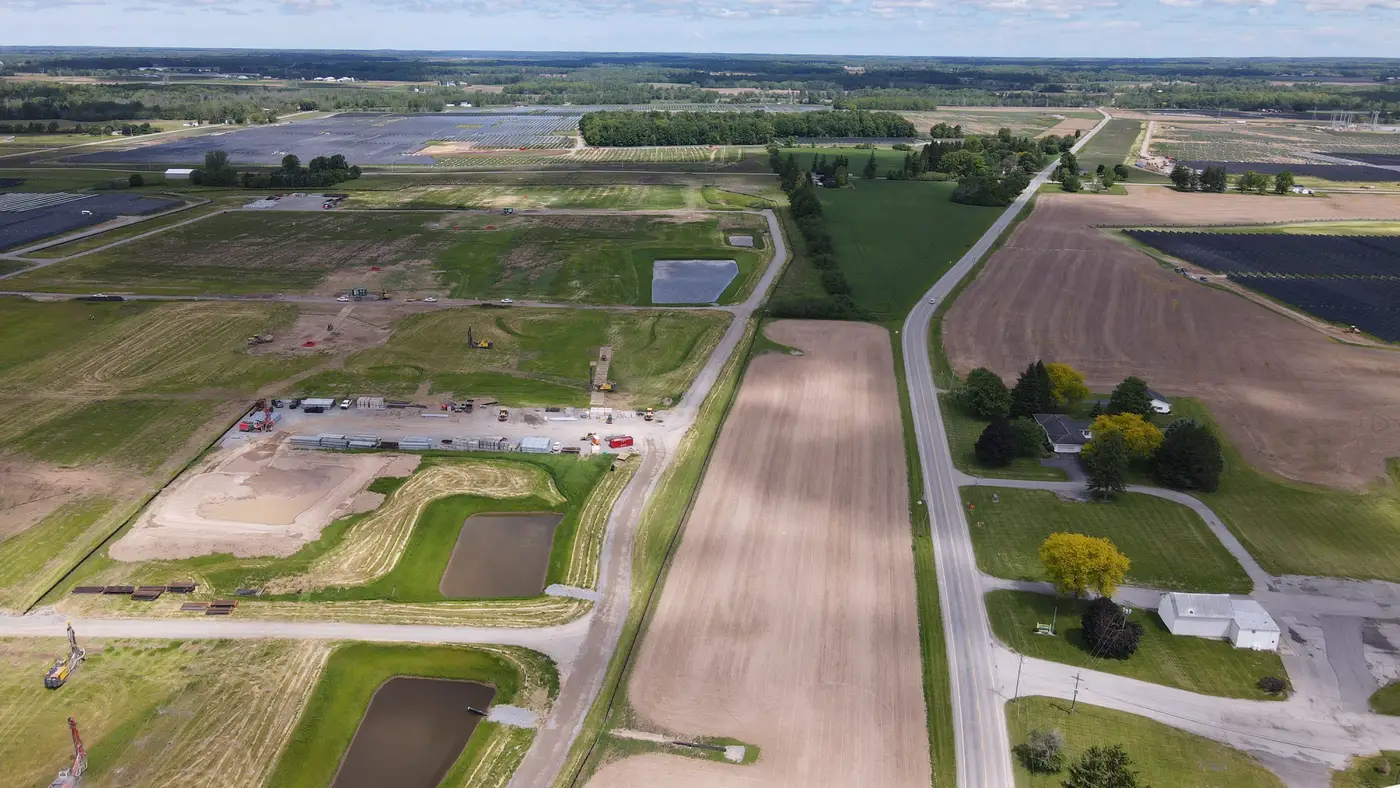
There's a county road we've been watching where three parcels sat as soybean fields for most of a decade, zoned agricultural, taxed as agricultural, the kind of land nobody in our trade gives a second look. Then over about eleven weeks this quarter, all three broke ground within days of each other. Different developers, different hyperscale tenants, same transmission corridor, same substation upgrade feeding all of them.
The clustering follows the grid math behind each project, not chance.
The pattern goes like this. A utility commits to a 345kV line upgrade or a new substation to serve one anchor customer. The interconnection study that justifies the spend rarely pencils out for a single 150MW load. It pencils out because the utility is already fielding inquiries for two or three more parcels on the same feeder. So the first project to get its grading permit is often the visible edge of a queue, not a one-off. By the time silt fence goes up on parcel one, parcels two and three are usually already under option, sometimes already permitted, just quieter about it.
On this stretch, parcel one's pad grading started in early September. We caught the first scraper tracks about two weeks later. Parcel two's silt fencing and laydown yard appeared in late September, a good month before anyone outside the immediate deal team would have heard a word about it. Parcel three's earthwork mobilized in mid-October, and that's roughly when the first trade press item surfaced, covering parcel one as news.
For a BD lead at a power or civils sub, that gap matters more than almost anything else in the sales cycle. If you're reading about parcel one in a newsletter, you've already missed the window to get in front of the GC on parcel two's site logistics plan. The teams that got early meetings on this corridor weren't the ones with the best relationships. They were the ones who noticed the substation easement filing and started asking questions before the second campus had a name.
There's a civils logic to clustering too, beyond the grid. Once a developer has done the water table work, the road-access negotiations with the county, and the fiber route survey for one parcel, the adjacent parcel is a known quantity. Permitting offices that have seen one data centre application from a given corridor move faster on the second and third. Soil reports and haul-road approvals get reused, informally if not formally. A corridor that's absorbed one hyperscale build is cheap, in relative terms, for a developer to build the next one into.
None of this shows up on a planning portal search until someone files. It shows up as dirt moving. A pad that's been cleared but not yet poured. A substation yard with conduit trenches but no transformers. A shell with structural steel up but no cladding. Those stages are where the packages for grounding, switchgear, chillers and civils actually get scoped, weeks or months before the tender notice goes out.
That's the whole case for watching the ground instead of the paperwork. If you want a monthly read on pad, substation, cooling plant and shell progress for a parcel you've got your eye on, that's the job Data Centre Build Watch is built to do.
We're planning a return visit to this corridor in the spring, once the concrete trucks start showing up in earnest. Three campuses in one quarter on what used to be soybeans earns a second look.