16 November 2026
Ductbank vs busway: what the routing choice means for your bid
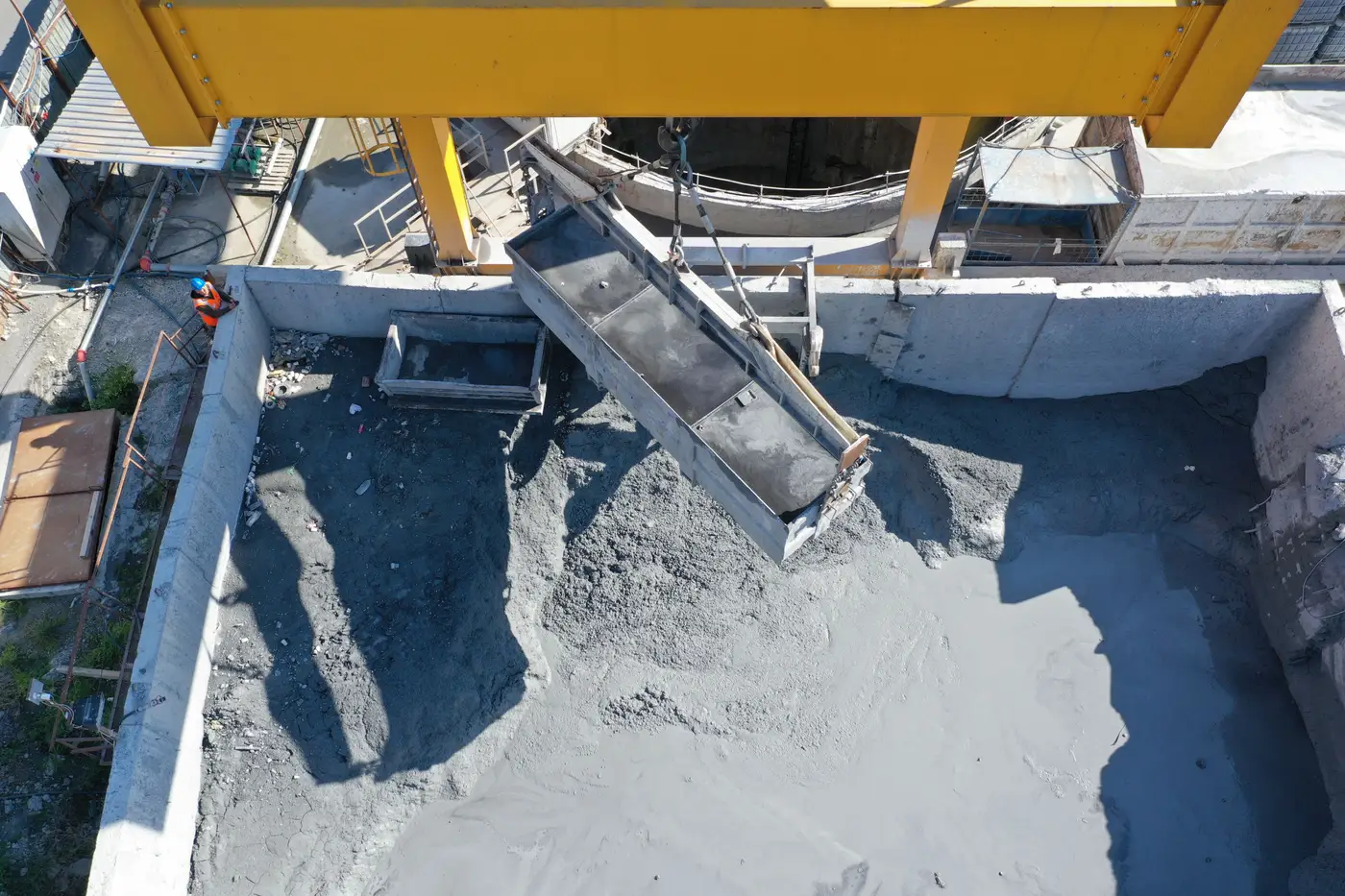
Every hyperscale job has a point where the design team decides how power gets from the substation yard to the white space. That one call, underground ductbank or overhead busway, resets the civils scope, the trenching sequence and when the power package gets priced. Get a read on which way a site is going before the tender drops and you're pricing from the right drawing set instead of guessing.
Ductbank: concrete in the ground before steel goes up
A concrete-encased ductbank is still the default on a lot of hyperscale campuses, especially where the utility interconnect sits a few hundred metres from the data hall and the owner wants redundant feeder paths that don't share a single trench. You're looking at banks of PVC or fibreglass conduit, rebar cages, and a pour schedule that has to happen before the slab goes down and well before the building envelope closes.
That sequencing is the thing to watch. Ductbank work shows up as trenching and formwork on the pad months before anyone sees a steel frame. If you're a civils subcontractor, that's your earliest visible signal that a power package is coming. If you're a power subcontractor, ductbank runs mean your conduit, pulling and termination scope is locked to a civils milestone you don't control, so you need to see that milestone land before you can firm up a programme.
Busway: when the design moves load above the slab
Busway shifts the routing problem. Instead of burying feeders, the design runs prefabricated bus duct, often vertically through risers or horizontally on cable tray and ladder rack above the raised floor or in a service corridor. It's common where the owner wants faster field installation once the shell is weathertight, or where tap-off density for IT load makes busway cheaper to reconfigure later than conduit set in concrete.
For a bid, busway means less early civils trenching and more late-stage mechanical and electrical fit-out work, which lands closer to shell completion. That's a different cash flow and a different crew mobilisation window than ductbank. A busway vs cable tray decision inside the white space also changes containment and support steel scope, which is often quoted by a different trade than the one pricing the substation feeders.
Why the routing call matters before you've seen a line item
The ductbank-or-busway decision usually gets locked in the design-development drawings, long before packages go out. By the time a tender notice or an industry newsletter mentions the site, the routing is already fixed and the scope split between civils, power and MEP has already settled. Waiting for that notice means you're pricing against a design decision someone else made months earlier, with no view into which approach the site took.
What you can see, without the drawings, is the construction itself. A site cutting long, straight trenches across the pad ahead of the substation pour is telling you something different than a site that's gone straight to foundations and steel with no trenching pattern at all. Tracking shell, substation and cooling plant progress across a pipeline of sites is how you catch that signal early enough to act on it. That's the read Data Centre Build Watch gives a bid team: a monthly, per-site progress view of the build across the hyperscale and big-box pipeline, so the substation trenching or the riser steel shows up on your radar before the packages are being quoted.
If you price civils, power or cooling packages on these jobs, it's worth seeing what that monthly read looks like for the sites you're already tracking.